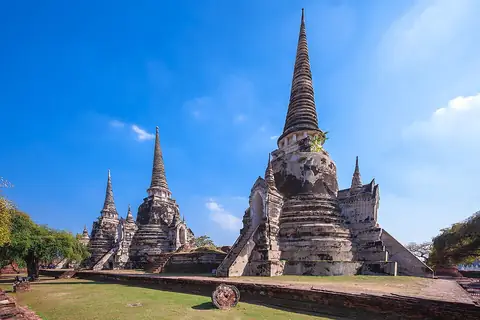
Wat Phra Si Sanphet was the royal temple within the palace compound of the Ayutthaya Kingdom. No monks lived here; it was used for the court's most important ceremonies. Its three Sri Lankan style chedis hold the ashes of kings, and the row of three thin spires across a green lawn is the picture most people have in mind when they think of Ayutthaya. The temple was also the model for Wat Phra Kaew in Bangkok.
Fees and hours, the history of the temple and its lost standing Buddha, a walking order through the ruins, Wihan Phra Mongkhon Bophit (which keeps different hours from the temple), Wat Phra Ram and the Chao Sam Phraya Museum as add-ons, sample plans, photo tips, food and a budget. Fees are set by the Fine Arts Department and can change, so the price board at the ticket booth is the final word.
We earn a commission if you book through our links. The price you pay does not change. How we choose
Quick facts before you go
| Fee (Thai) | 10 baht per site, 40 baht for the 7-site combo ticket |
|---|---|
| Fee (foreigner) | 80 baht per site, 300 baht for the 7-site combo ticket. Pay cash at the booth |
| Opening hours | Ticket booth about 08:30 to 17:00 daily, walk around until about 18:00. Arrive before 16:00 |
| Wihan Phra Mongkhon Bophit | Free, open about 08:30 to 16:30, so it closes before the temple. Check the sign at the door |
| Time needed | 45 to 60 minutes for the temple and old palace ground; add 20 to 30 minutes for the Wihan |
| Where | On the old island of Ayutthaya, Pratu Chai area, in the former royal palace grounds, with the Wihan on the south side of the temple |
| Getting there | Tuk-tuk, bicycle, scooter, car, or a day tour from Bangkok. There is parking |
| Dress | Cover shoulders and knees, shoes for grass and bricks, no climbing on the ruins |
| Official information | Ayutthaya Historical Park page on Facebook (facebook.com/AY.HI.PARK) posts free-entry days and special hours |
The temple stays open later than most others on the loop, but the Wihan next to it closes earlier. If you arrive late in the afternoon, go into the Wihan first, then walk the three chedis when the light is low and the heat has eased.
History of Wat Phra Si Sanphet: from palace to royal temple
This ground held the first royal residence of Ayutthaya. King Ramathibodi I (U Thong) built his palace here beside Phra Ram lake around 1350. Later King Borom Trailokanat moved the palace north and dedicated the old site as a sacred precinct inside the palace walls, a place for important court ceremonies. That is why no monks lived here. Monks came only for ritual days, such as the oath of allegiance taken by royal officials.
In 1492 King Ramathibodi II had two large chedis built, one for the ashes of his father, Borom Trailokanat, and one for those of his elder brother, Borommaracha III. In 1499 he added a very large royal hall, and in 1500 he cast a standing Buddha about 16 m high covered in gold, roughly 171 kg of it. The statue was called Phra Si Sanphet Dayan and gave the temple its name. A third chedi stands a little further west. It was built by Borommaracha IV to hold the ashes of Ramathibodi II.
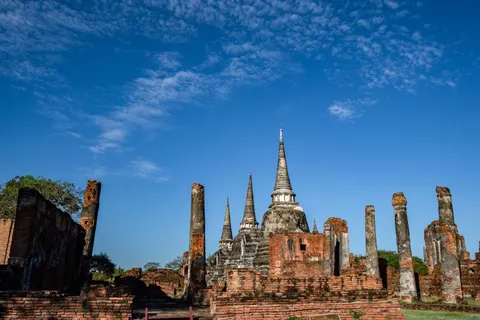
King Ekathotsarot, around 1605 to 1610, had gold and silver Buddha images installed here, and King Prasat Thong ordered a major restoration around 1631. The small square mondops between the chedis are believed to date from about that time, and there was another repair under King Borommakot.
When Ayutthaya fell in 1767 the Burmese army burned the temple and stripped the gold from the statues for melting. Only the chedis survived. In the Bangkok period, Rama I had the pieces of the great Buddha that could not be repaired taken to Bangkok and placed in a large chedi at Wat Pho. The three chedis at Ayutthaya were restored in the time of Field Marshal Plaek Phibunsongkhram, which is why they look as they do now.
In 1932 the Fine Arts Department began excavating to protect the site from looters. In the eastern chedi it found votive tablets, Buddha images in several metals and a stone stupa holding smaller stupas nested inside one another. Some of the finds are shown in the Chao Sam Phraya Museum. The temple was registered as a national monument on 5 March 1935 and lies inside the Historic City of Ayutthaya, a UNESCO World Heritage Site.
One more thing makes the site worth a stop: its layout was the model for Wat Phra Kaew, the Temple of the Emerald Buddha in Bangkok, which is also a palace temple without resident monks. If you have been to Wat Phra Kaew, seeing the original without a roof, gold or paint, only brick, shows how large the Ayutthaya court was.
Read next: Wat Mahathat, the other great temple in the old centre
What to see, in walking order
The temple and the palace ruins share one large lawn. Brick paths follow the old walls and mounds, and a walk around takes under an hour if you do not linger. When you walk in from the ticket booth, the three chedis come into view first; the rest are ruins you walk round to see.
1. The three Sri Lankan style chedis
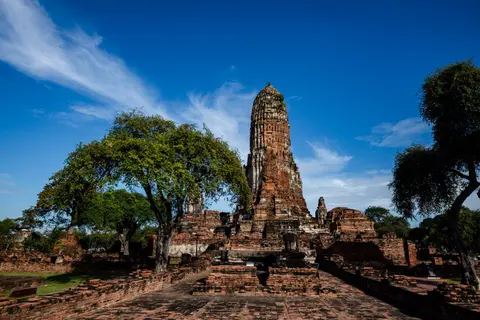
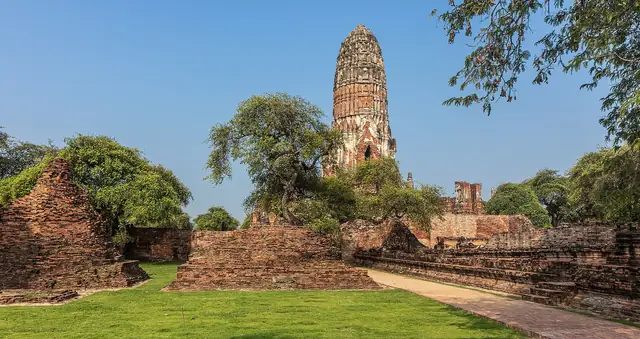
The three chedis stand in a row. Each has a round base, a bell-shaped body and a tall slender spire, and each holds the ashes of a king. Small mondops built of brick sit between them. Do not climb onto the platform. Shoot from the lawn in front and from the sides, and step back a little to fit all three into one frame.
2. The royal hall and its brick columns
Next to the chedis you can still see the base and brick columns of the great royal hall that once held the standing Buddha. Stand between the lines of columns and look towards the chedis. This is the frame most visitors take home, because the columns act as a natural border.
3. The palace ruins and walls
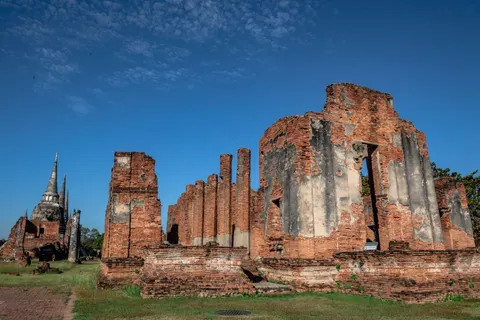
Around the chedis you can trace brick walls and foundations of the former palace. North of the temple is where King Borom Trailokanat built his new palace. Stand on the path and picture it as the centre of a kingdom that lasted until the Burmese sacked the city in 1767.
4. Arched doorways and gateways
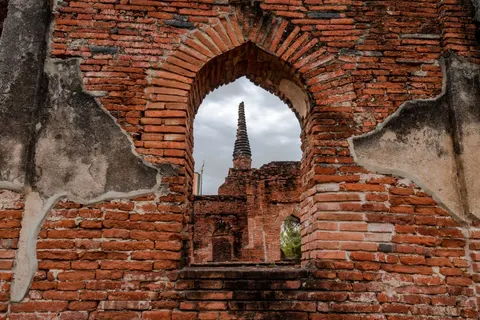
Several of the brick walls have pointed arches. Look through one of them towards a chedi spire for a view that most people miss because they shoot straight on. More photo ideas follow further down.
5. Wihan Phra Mongkhon Bophit
The last stop is the Wihan on the south side of the temple, less than five minutes away on foot. Allow 20 to 30 minutes. It has its own section below.
There is almost no roof or shade on the site, only a few trees and low walls. If you come between mid-morning and mid-afternoon, bring a hat and water.
Phra Si Sanphet Dayan, the standing Buddha that is no longer here
Many visitors ask where the main statue is. The temple is named after a huge standing Buddha that once stood in the royal hall. It was about 16 m high, covered in roughly 171 kg of gold, and cast in 1500. It was the principal image of the most important royal temple of Ayutthaya.
After the fall of Ayutthaya the statue was stripped of its gold and nothing of the original form remained. Rama I of Bangkok had the damaged pieces taken to the new capital and placed in a chedi at Wat Pho. So there is no statue to see at Ayutthaya. What you can see is the brick base and columns of the hall that sheltered it. If you stand among the columns and picture a Buddha 16 m high, you begin to feel how big the building was.
If you have time in Bangkok, visit Wat Pho. The chedi that holds the pieces of the statue is still there. At Ayutthaya, look at the hall's base and the three chedis that survived.
Wihan Phra Mongkhon Bophit: history, hours and etiquette
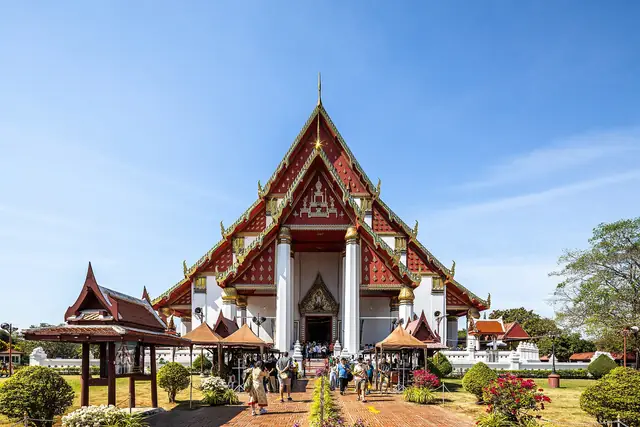
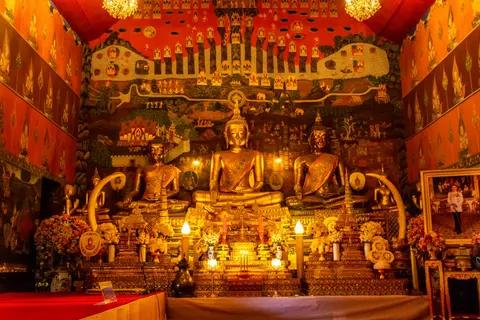
Wihan Phra Mongkhon Bophit stands directly south of Wat Phra Si Sanphet. It is a hall built around a very large seated bronze Buddha in the Subduing Mara pose. The image is about 12.45 m high and about 9.55 m across the lap, one of the largest cast bronze Buddhas in Thailand, and it is covered entirely in gold leaf. Inside, the hall is simple: the image and floor space for sitting and praying.
The Wihan is a working place of worship, with local visitors praying and leaving flowers and incense throughout the day. It is not an empty ruin, so it needs different manners from walking among the chedis. There is no entry fee, and you can make a donation if you wish.
A short history of the Buddha
- No record says when the image was cast. It is believed to date from early Ayutthaya, and it first stood east of the royal palace.
- In the reign of King Songtham, in the early 17th century, it was moved to its present spot and a mondop was built over it.
- Around 1706, in the reign of King Suea, lightning struck the mondop and fire damaged the upper part of the image. The mondop was replaced by a larger hall.
- In 1767 the Burmese burned the roof, and the head and right arm broke off. The image stood in the open for more than a century.
- In 1955, while repairing the shoulder, workers found many small Buddha images inside the large one. They are now in the Chao Sam Phraya Museum.
- The present Wihan was built in 1956 and 1957 with funds from the Burmese government, and the whole image was covered in gold leaf in 1992.
Opening hours and crowds
The Wihan is open about 08:30 to 16:30, so it closes earlier than the temple. If you arrive in the afternoon, visit it first. Tour coaches from Bangkok tend to arrive from about 10:00 to 14:00, which is when it is busiest. For a quieter visit, come when it opens or after about 15:00.
Etiquette inside
- Take off your shoes and your hat before you step inside.
- Cover your shoulders and knees; no very short shorts.
- When you sit, tuck your feet behind you rather than pointing them at the Buddha.
- No selfies with your back to the image, and keep your voice low.
- Follow what local visitors do and stay quiet when people are praying.
East of the Wihan is a broad open field that was once used for royal cremation ceremonies, like Sanam Luang in Bangkok. Today it is a lawn.
Fees and the 7-site combo ticket: is it worth it?
Wat Phra Si Sanphet charges 10 baht for Thais and 80 baht for foreigners, paid in cash at the ticket booth. The 7-site combo ticket costs 40 baht for Thais and 300 baht for foreigners and covers the main sites of the park. Ask the staff for the current list and how many days it stays valid.
| Plan | Separate tickets (foreigner) | Best choice |
|---|---|---|
| Only Wat Phra Si Sanphet and the Wihan | 80 baht (the Wihan is free) | Single ticket |
| Wat Phra Si Sanphet and Wat Phra Ram | 160 baht | Single tickets |
| Wat Phra Si Sanphet, Wat Phra Ram and Wat Mahathat | 240 baht | Single tickets, or the combo if you may add a fourth site |
| Four or more sites in one or two days | 320 baht or more | 7-site combo ticket at 300 baht |
| Chao Sam Phraya Museum | 200 baht (not on the combo) | Pay at the museum |
The Wihan is free. Wat Yai Chai Mongkhon charges its own small fee of about 20 baht and is not on the combo ticket. Wat Lokayasutharam, with its reclining Buddha, is free to enter, and Wat Phra Mehru charges foreigners about 20 baht. If you buy the combo, buy it at the first site you enter and keep it safe, because you show it at every site.
Fees can change by notice, and some days bring special events or free entry. Check facebook.com/AY.HI.PARK or the sign at the ticket booth.
Wat Phra Ram, the Chao Sam Phraya Museum and other stops nearby
The sights around the temple are close together. Wat Phra Ram is about 400 m away, Wat Worachetharam about 550 m, the museum about 900 m and Wat Mahathat about 1 km. All can be walked in cool weather, but most people take a tuk-tuk or cycle because of the heat.
Wat Phra Ram
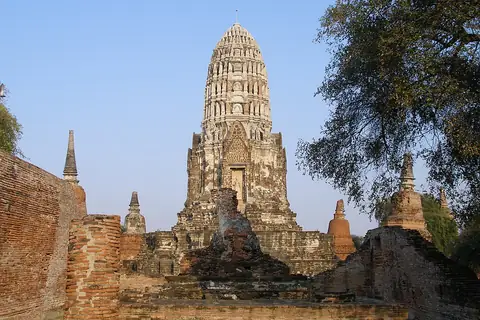
Wat Phra Ram was built by King Ramesuan on the spot where the body of King Ramathibodi I was cremated. It stands beside Phra Ram lake. The main prang sits on a tall base with mythical animals at the corners, and smaller chedis surround it. It is large, and quieter than most of the other temples on the loop. Entry is 80 baht for foreigners and 10 baht for Thais, it is open about 08:00 to 18:00 and it is one of the combo-ticket sites. Allow 30 to 45 minutes.
Wat Worachetharam
King Ekathotsarot had this temple built where his elder brother, King Naresuan, was cremated. The name means beloved elder brother. It is open about 08:00 to 17:00. It is a small temple that most visitors skip; add it if you like Thai history. Ask at the gate for the fee.
Chao Sam Phraya National Museum
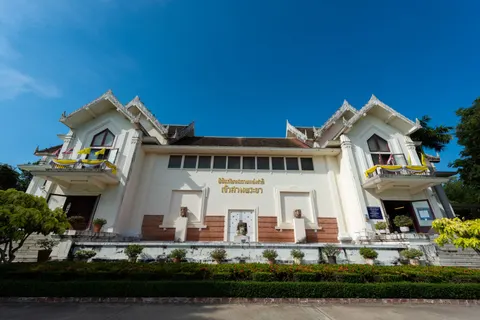
The museum is on Rojana Road, opposite the Phra Nakhon Si Ayutthaya Rajabhat University. It was built to hold the treasures found in the prang of Wat Ratchaburana and other finds from the province. It is open Tuesday to Sunday about 09:00 to 16:00 and closed on Monday. Admission is 30 baht for Thais and 200 baht for foreigners, and it is not part of the combo ticket. Allow 45 to 60 minutes.
It holds real objects from the places you just walked through, such as finds from the chedis of Wat Phra Si Sanphet and the small Buddha images found inside Phra Mongkhon Bophit. It makes a good break during the hottest hours.
Routes that link Wat Phra Si Sanphet with the temples around it
These work whether you have a car, a tuk-tuk or a bicycle. The key points: the temple stays open later (you can walk until about 18:00), the Wihan closes at about 16:30, and the sun is harshest from midday to 14:00.
Cool morning half day (3 to 4 hours)
- 08:30 Wat Mahathat and the Buddha head in the tree roots, before the tour coaches arrive (30 to 45 minutes).
- 09:30 Wat Ratchaburana, across the road (30 to 45 minutes).
- 10:30 Tuk-tuk to Wat Phra Ram and its lakeside prang (about 30 minutes).
- 11:15 Wat Phra Si Sanphet: the three chedis and the palace ground (45 to 60 minutes).
- 12:15 Walk on to Wihan Phra Mongkhon Bophit (20 to 30 minutes), then lunch.
Late afternoon route, softer light
- 14:30 Chao Sam Phraya Museum, out of the sun (45 to 60 minutes).
- 15:30 Wihan Phra Mongkhon Bophit, before it closes at about 16:30 (20 to 30 minutes).
- 16:00 Wat Phra Si Sanphet in low light with fewer people (45 to 60 minutes).
- 17:00 Carry on to Wat Chaiwatthanaram for sunset if you have a vehicle, or head back to your hotel.
Full day without a car
- By tuk-tuk, hire one for the whole circuit (prices are under Getting there) and give the driver the order above.
- By bicycle, start at first light, rest at lunch in an air-conditioned place and ride on in the late afternoon.
- On a day tour from Bangkok, this temple is usually one of the first three or four stops. The time you get is often shorter than you want, so ask your guide for extra time at the start if you like photography.
Wat Mahathat: fees, hours and the Buddha head in the tree roots
How to get to Wat Phra Si Sanphet
| Option | Best for | Notes |
|---|---|---|
| Tuk-tuk | Anyone who does not want to cycle in the heat | Agree the price per vehicle before you get in. About 200 to 300 baht an hour, or roughly 800 to 1,500 baht for a 3 to 4 hour temple circuit; a single hop between two temples is 60 to 100 baht |
| Bicycle | Cool mornings and the cooler months | About 50 to 100 baht a day to rent. The island is flat; from the train station you cross by a small ferry |
| Private car or taxi | Families and groups | Parking is usually available near the entrance, though it fills up at weekends |
| Day tour from Bangkok | No planning, with transport and a guide | See the booking boxes below and check whether admission is included |
From Bangkok the main choices are a train, van or bus to Ayutthaya, then a tuk-tuk or the small ferry across to the island. You can compare times and prices on one page.
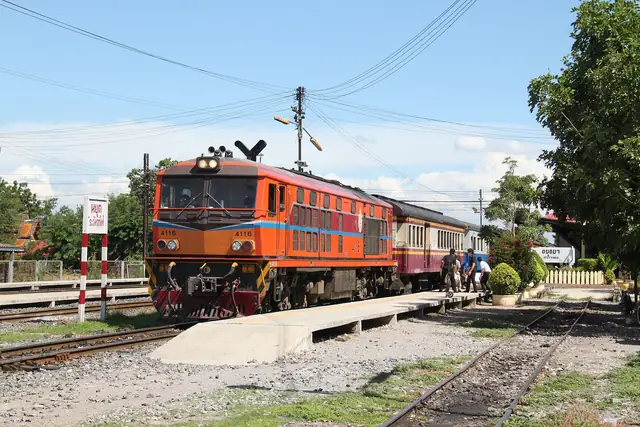 12Go
Bangkok to Ayutthaya on 12Go
From US$2
Price as of 5 Nov 2026Compare train, van, bus and taxi from Bangkok to Ayutthaya on one page, with departure times and prices for the date you choose.
Book on 12GoIf you want to see the town by tuk-tuk without negotiating, one tour from Bangkok already includes a tuk-tuk ride in the old town.
Photos, prices and reviews from Klook
A 9.5-hour day trip from Bangkok in a small group with an English or Japanese guide. It includes a tuk-tuk ride in town and a cafe stop. Free cancellation 24 hours before (as of 5 Nov 2026).
Book on KlookTuk-tuk, bicycle and ferry on the island
Bangkok to Ayutthaya: BNEX train, van, bus and boat compared
Best time of day and year
Time of day
The site is an open lawn with almost no roof or shade. The best times are first thing after opening and late afternoon after about 15:30, when the low light flatters the chedis and the heat eases. From 11:00 to 14:00 it is hottest, and tour coaches from Bangkok tend to arrive from about 10:00, so it is the most crowded.
Weekends and public holidays are busiest in front of the three chedis. For cleaner frames, go on a weekday morning or late afternoon. Evening lighting at the temples is seasonal, so check the Historical Park Facebook page before you go.
Time of year
| Period | Weather | Advice |
|---|---|---|
| Nov to Feb | Cooler and driest | Best months. The open lawn is comfortable, but it is also the busiest time, so book your hotel early near holidays |
| Mar to May | Very hot, April afternoons often reach 35 C or more | Go early or late, bring a hat and plenty of water, and rest in an air-conditioned place at midday |
| May to Oct | Rainy season, rain usually in the afternoon | Mornings are often drier. Grass and bricks are slippery, so carry a folding umbrella or a rain jacket |
| Late rainy season | River levels can be high in some years | Follow the news before you travel, and change your plan if there are water-level warnings or closures |
Ayutthaya at night: lit temples and night markets
 KKday
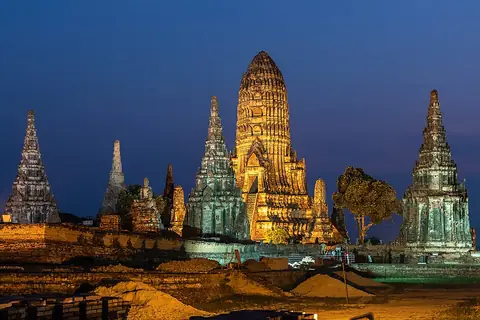
Ayutthaya Night Lights by Tuk Tuk: Famous Temple Tour
From US$25.78
Price as of 5 Nov 2026From US$25.78. A 2-hour tuk-tuk tour of lit temples with an English and Thai guide, starting and ending in Ayutthaya. Free cancellation 1 day before (as of 5 Nov 2026).
Book on KKdayPhotos, prices and reviews from Klook
Departs Bangkok, small group, English and Japanese guide. Duration: 9.5 hours. Free cancellation 24 hours before.
Book on KlookPhoto tips for Wat Phra Si Sanphet
The shot everyone takes is the three chedis in a row across the lawn. To get something different, try these.
- The full row of three: walk back along the brick path in front until you are far enough away, and use a wide lens or the wide mode on your phone.
- The column frame: stand among the columns of the old hall and look towards the chedis for leading lines and an orange brick border.
- The archway: shoot through a brick arch towards a spire for depth and no people in the frame.
- Morning light: soft and clean, with a deep sky behind the dark chedis.
- Late light: between 16:00 and 17:00 the low sun brings out the texture of the plaster and brick.
- People with the chedis: have them stand on the path in front, never on the platform or on ruins.
Wihan Phra Mongkhon Bophit is a place of worship. Photos of the atmosphere are fine, but do not use flash, turn your back on the Buddha for a selfie or set up a tripod when it is busy. Follow any sign that bans photos in a spot. If you plan to use a drone, ask the staff first.
What to wear and the rules on site
Both the temple and the Wihan expect modest dress. Cover your shoulders and knees; tank tops, very short shorts and swimwear are not appropriate. A light scarf in your bag fixes most problems. The best shoes for grass and brick are sneakers or sandals with a heel strap, because you will take them off to enter the Wihan.
- Do not climb the chedis, platforms or walls, even where there is no sign.
- Do not sit or step on the base of a Buddha image.
- Do not take bricks or plaster away as souvenirs.
- Do not leave litter in the ruins.
- Stay out of areas with a rope across them.
With children, older visitors and wheelchairs
The main route is level, but the ground is old brick, grass and uneven brick edges. Slow walkers can complete the circuit in 45 to 60 minutes if they rest often. There are few seats on the lawn, so bring your own water and a hat.
- Young children: the lawn is wide and free of traffic, but there is no shade, so come early or late, bring a hat and water, and remind them not to climb the chedis or walls. Small stroller wheels catch on bricks, so a carrier is easier.
- Older visitors: use a tuk-tuk between temples and walk only as far as feels comfortable. Two or three sites a day is plenty.
- Wheelchairs: brick and grass are heavy going. The main path is smoother than the rest. The Wihan is entered from the front, so ask staff which way in is easiest.
- Parking: usually available near the entrance, but it fills quickly at weekends, so arrive early.
Plan B for heat and rain
- Extreme heat: visit early or late, and spend midday at the Chao Sam Phraya Museum or lunch in an air-conditioned restaurant.
- Afternoon rain: check the forecast in the morning. If rain comes, step into the Wihan, which has a roof, and go back to the ruins when it stops. Grass and bricks are slippery.
- Heavy rain: if the ruins are soaking, sit out the worst in a cafe or the museum and return later. Keep away from old brick walls in strong wind.
- Overcast days: good for photos, with soft light, cooler air and fewer people.
What to eat near Wat Phra Si Sanphet
There is no serious restaurant inside the site. Near the entrance you can usually find small stalls with drinks, fruit and snacks, while sit-down restaurants are farther away. For a full lunch, take a tuk-tuk into town or to the river.
- Boat noodles: small, rich bowls that you eat several of. A quick, cheap lunch.
- Roti sai mai: roti wrapped around coloured strands of cotton candy, a sweet that visitors often take home.
- Grilled river prawns: a speciality of riverside restaurants. Ask the price per kilo or per plate before you order.
- Snacks on the way: coconut water, cut fruit and ice cream. Ask the price before you buy.
Where to stay near Wat Phra Si Sanphet
The temple is in the Pratu Chai area, in the middle of the island. If you sleep on the island you can reach it before the day-tour crowd and see it in softer light. A single night also lets you see the town in the evening.
 Luxury
Sala Ayutthaya
U Thong Road, Pratu Chai, on the river
U Thong Road, Pratu Chai, on the river, in the same area as the temple. A luxury choice for anyone who wants to stay as close to the ruins as possible.
See prices and availability on the booking page
 Mid-range
Classic Kameo Hotel & Serviced Apartments
Rojana Road, Phai Ling
Rojana Road, Phai Ling, on the same road as the Chao Sam Phraya Museum. A mid-range choice for families who want larger rooms or parking.
See prices and availability on the booking page
 Budget
Early Bird Hostel Ayutthaya
Hua Ro, near the train station
In Hua Ro, near the train station. A budget choice for solo travellers or couples who arrive by train and rent bicycles.
See prices and availability on the booking page
Budget for Wat Phra Si Sanphet, half day and full day
These are rough figures per person for a foreign visitor, not counting transport from Bangkok or your hotel.
| Plan | Entry fees | Getting around town | Food | Rough total |
|---|---|---|---|---|
| Wat Phra Si Sanphet and the Wihan by bicycle | 80 baht | Bicycle 50 to 100 baht | Two bowls of boat noodles 60 to 120 baht | About 190 to 300 baht |
| Half day, four temples and the museum, tuk-tuk shared by two | Combo ticket 300 baht plus museum 200 baht | Tuk-tuk 400 to 750 baht each | Lunch 100 to 200 baht | About 1,000 to 1,450 baht |
| Day tour from Bangkok | As included in the tour | Included in the tour | As included in the tour | See the booking boxes |
Tuk-tuk prices can be negotiated and depend on the number of temples and the season. If you are short of time, choose three or four temples that are close together rather than trying to see them all.
Common mistakes at Wat Phra Si Sanphet
- Reaching the Wihan too late: it closes at about 16:30, before the temple beside it. Visit it first, then walk the chedis.
- Arriving at noon: the lawn is hottest and most crowded. Move your visit to the morning or late afternoon.
- Wrong clothes: shorts or a tank top mean you lose time finding a scarf before the Wihan.
- Assuming you always need the combo ticket: if you will not visit four sites, single tickets are cheaper.
- Climbing a chedi base for a photo: it breaks the rules and harms the monument. Shoot from the ground.
- Forgetting to take off your shoes at the Wihan: take them off at the entrance and leave them where others do.
- Expecting to see the golden standing Buddha: it is gone. What remains are the ruins and the chedis.
- Booking a tour without checking if admission is included: if it is not, add 80 baht per temple at the booth.
Day tours from Bangkok to the Ayutthaya temples
If you are coming from Bangkok and do not want to organise transport, a full-day tour is the simplest option. Tours that include admission save you the ticket queue at each temple; on the others, add 80 baht a temple at the booth.
 KKday
Ayutthaya Temples & River Cruise Full-Day Tour from Bangkok
From US$60.61
Price as of 5 Nov 2026From US$60.61. Meet at River City Pier, coach to Ayutthaya, then a river cruise back to Bangkok with a buffet lunch on board. Temple and palace admission included, English and Thai guide, minimum 15 travelers. Free cancellation 4 days before (as of 5 Nov 2026).
Book on KKday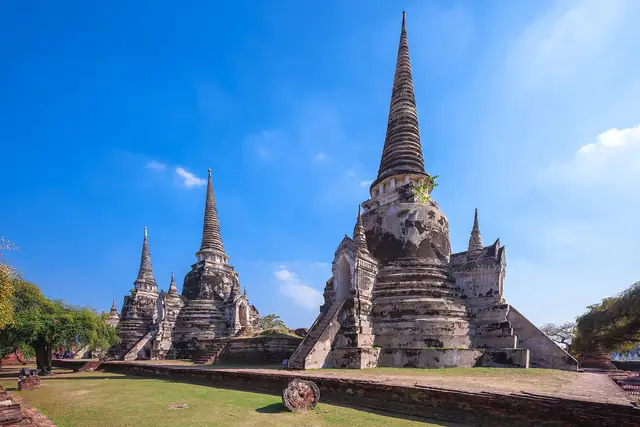 KKday
Bangkok Ayutthaya Heritage Temples Tour: Lunch & Entrance Fees
From US$24.24
Price as of 5 Nov 2026From US$24.24. An 8-hour tour with lunch and options that include entrance fees, meeting in Bangkok or with hotel pickup (as of 5 Nov 2026).
Book on KKdayBudget temple tours (check what admission covers)
Photos, prices and reviews from Klook
An 8-hour tour, join-in or private, with temple tickets not included. Free cancellation 24 hours before (as of 5 Nov 2026).
Book on Klook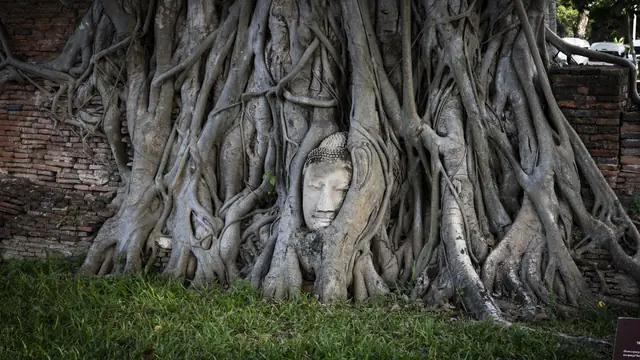 KKday
Ayutthaya Highlights & Ancient Temples Day Tour from Bangkok
From US$23.91
Price as of 5 Nov 2026From US$23.91. A full-day join-in tour of 9 to 12 hours with hotel pickup in Bangkok between 06:15 and 07:00, or meet on Khao San Road for a 07:15 departure. Check on the booking page whether temple admission is included. Free cancellation 2 days before (as of 5 Nov 2026).
Book on KKdayA temple day that ends at sunset
Photos, prices and reviews from Klook
A full-day temple tour from Bangkok with an English or Chinese guide and a sunset boat ride before the return, join-in or private (as of 5 Nov 2026).
Book on KlookIf you would rather explore on your own and stay overnight in Ayutthaya, see the hotels above, and compare the train, van and bus from Bangkok under Getting there.
Ayutthaya tours from Bangkok on KKday
Photos, prices and reviews from KKday
Frequently asked questions
How much does Wat Phra Si Sanphet cost for foreigners?
80 baht for foreigners and 10 baht for Thais, or a 7-site combo ticket at 300 baht for foreigners and 40 baht for Thais. Pay cash at the booth. Trust the price board at the gate, since the rates can change.
What time does Wat Phra Si Sanphet open and close?
The ticket booth is open about 08:30 to 17:00 and you can walk around until about 18:00. Aim to arrive before 16:00 so you are not rushed. Hours can change on special days, so check the Ayutthaya Historical Park page on Facebook.
Is Wihan Phra Mongkhon Bophit free, and when does it close?
It is free to enter and open about 08:30 to 16:30, which is earlier than the temple next to it. If you arrive late in the afternoon, go into the Wihan first and walk the chedis afterwards. Take off your shoes, dress modestly and check the sign at the door.
How long do I need at Wat Phra Si Sanphet?
About 45 to 60 minutes for the temple and the palace ground, plus 20 to 30 minutes for the Wihan. With Wat Phra Ram and the museum, plan on half a day.
How much is the Chao Sam Phraya National Museum?
30 baht for Thais and 200 baht for foreigners, open Tuesday to Sunday about 09:00 to 16:00 and closed on Monday. It is not covered by the 7-site combo ticket.
Is the 7-site combo ticket worth it, and what does it cover?
It costs 300 baht for foreigners and covers the main sites of the park, such as Wat Phra Si Sanphet, Wat Phra Ram, Wat Mahathat, Wat Ratchaburana, Wat Chaiwatthanaram and Wat Maheyong. At 80 baht a site (320 baht for four), it is cheaper once you visit four or more. Ask at the booth for the current list and how many days it stays valid.
Can I wear shorts at Wat Phra Si Sanphet?
Cover your knees and shoulders, especially if you plan to enter the Wihan, which is a place of worship. A light scarf in your bag is an easy fix.
Where is the golden standing Buddha that gave the temple its name?
The 16 m standing Buddha covered in gold was stripped and burned when Ayutthaya fell in 1767. In the reign of Rama I the damaged pieces were taken to Bangkok and placed inside a chedi at Wat Pho, so there is no statue to see at the temple today. You can see the brick base of the hall where it stood.
What is the difference between Wat Phra Si Sanphet and Wihan Phra Mongkhon Bophit?
Wat Phra Si Sanphet is a ticketed field of ruins with the three chedis. Wihan Phra Mongkhon Bophit is a free, working place of worship built around a very large seated bronze Buddha. They stand side by side, with the Wihan to the south.
How do I get to Wat Phra Si Sanphet from Bangkok?
Take the BNEX train, a van from Mo Chit or a day tour to Ayutthaya, then a tuk-tuk or bicycle across the island. The Bangkok to Ayutthaya page compares times and prices.
Where the facts come from
- Ayutthaya Historical Park, Fine Arts Department (Facebook)
- Opening hours list for Ayutthaya attractions, TrueID (Thai)
- Wihan Phra Mongkhon Bophit history and hours, TrueID (Thai)
- Wihan Phra Mongkhon Bophit, Ayutthaya Province tourism site
- Wihan Phra Mongkhon Bophit, Thai Holiday Guide
- Wat Phra Sri Sanphet, Ayutthaya.History
- Cabinet decision on foreigner fees at historical sites, 25 Jul 2023, Infoquest (Thai)
- Ayutthaya admission fee table
- UNESCO World Heritage Centre: Historic City of Ayutthaya
- Tourism Authority of Thailand
Keep planning
 Plan your Ayutthaya tripHow many days, which temples, fees, where to stay
 Ayutthaya in one dayA timed plan from Bangkok with costs
 Ayutthaya in two days, one nightSunset, temples at night, morning market
 Ayutthaya tours and ticketsTours, river cruise, night tuk-tuk, train tickets with prices
 Where to stay in AyutthayaOn the island, by the river, near the station, 9 hotels
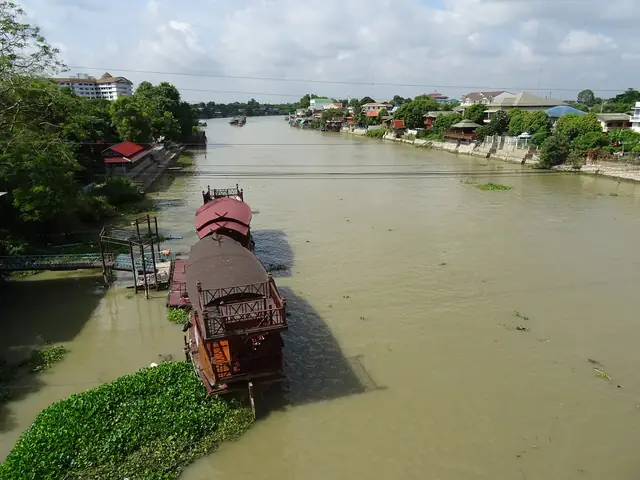
 Bangkok to AyutthayaBNEX train, van, bus, boat, times and fares
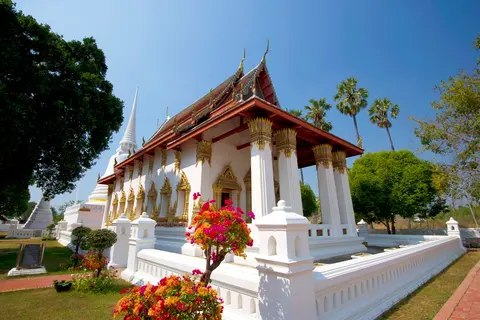 Getting around AyutthayaTuk-tuk, bicycle, ferry, and a note on elephants
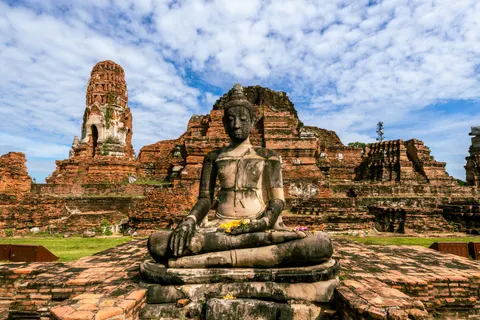 Wat MahathatThe Buddha head in the roots, fees, hours, photo etiquette
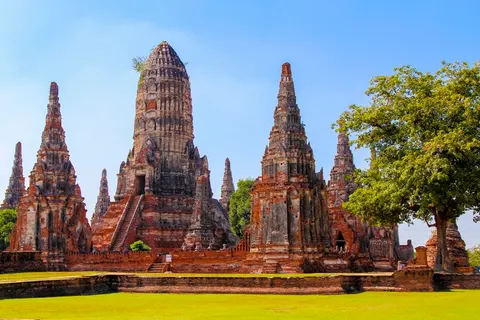 Wat ChaiwatthanaramRiverside prangs, sunset, Thai costume
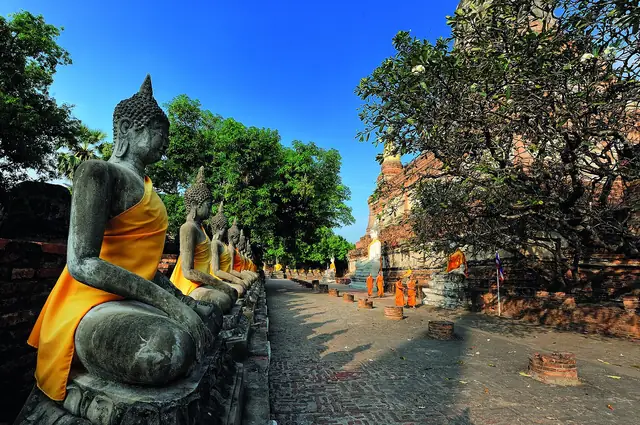
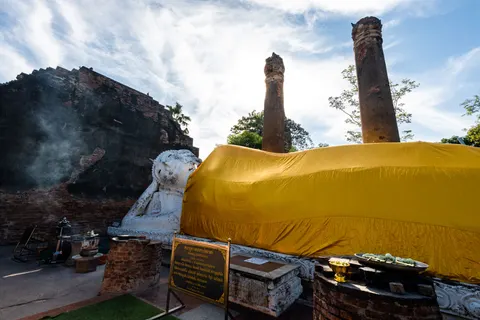 Wat Yai Chai MongkhonThe great chedi, a reclining Buddha, rows of Buddhas
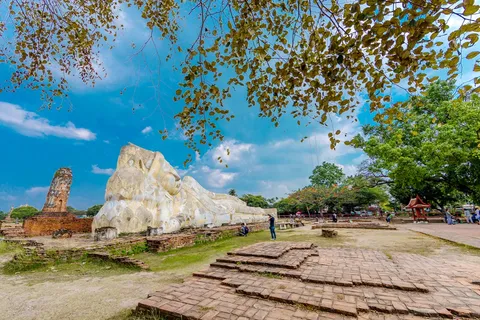 Wat LokayasutharamThe open-air reclining Buddha
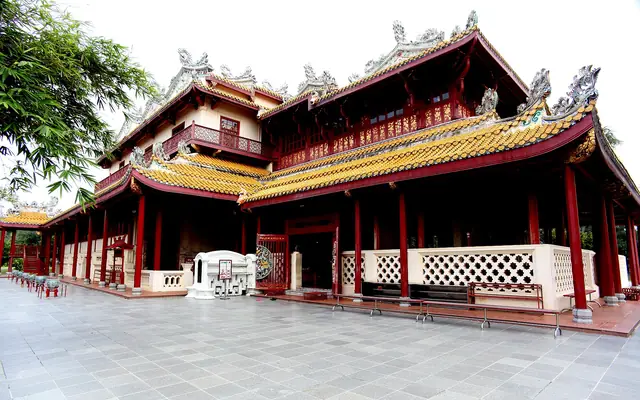
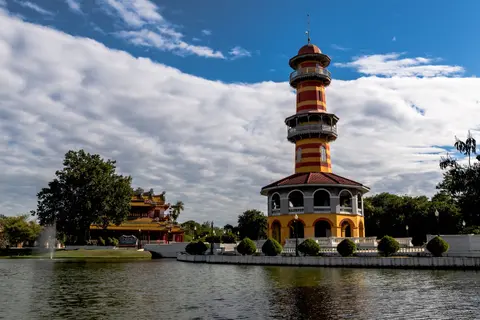 Bang Pa-In PalaceDress code, fees, hours and Wat Niwet Thammaprawat
 Ayutthaya at nightLit temples, night markets and the night tuk-tuk tour
 Ayothaya Floating MarketFees, hours, food and how to get there